Reimagining the Future Village Through “Architecture of Tomorrow”

What I want to talk about today is not just architecture.
Rather, using “architecture of tomorrow” as a starting point,
I want to rethink: what forms will the future village, the future community, and the future society actually take?
Most discussions about the future of society revolve around AI, robots, drones, big data, and automation. Yet very few people seriously ask:
“Where will people of the future actually live? How will they dwell?”
No matter how much the world changes, humanity must always answer one question: “Where do I make my life?”
01 Today’s Buildings Are Still Products of the Industrial Age
The mainstream architecture of our time is fundamentally built upon concrete, steel rebar, brick, pipe networks, and centralized energy supply. This system has several defining characteristics:
Requires vast industrial supply chains
Depends on centralized energy systems
Requires a professional construction apparatus
Demands high standardization
Relies on massive logistics networks
And with those characteristics come serious problems:
Not truly ecological
Heavily dependent on capital and industrial networks
Difficult to localize
High construction and maintenance costs
Almost no room for ordinary people to participate
This is a system of dwelling that can only be consumed — never truly mastered.
02 Why Does the Rural Revival Movement Rarely Discuss “Future Architecture”?
I respect many of the directions being explored in rural construction:
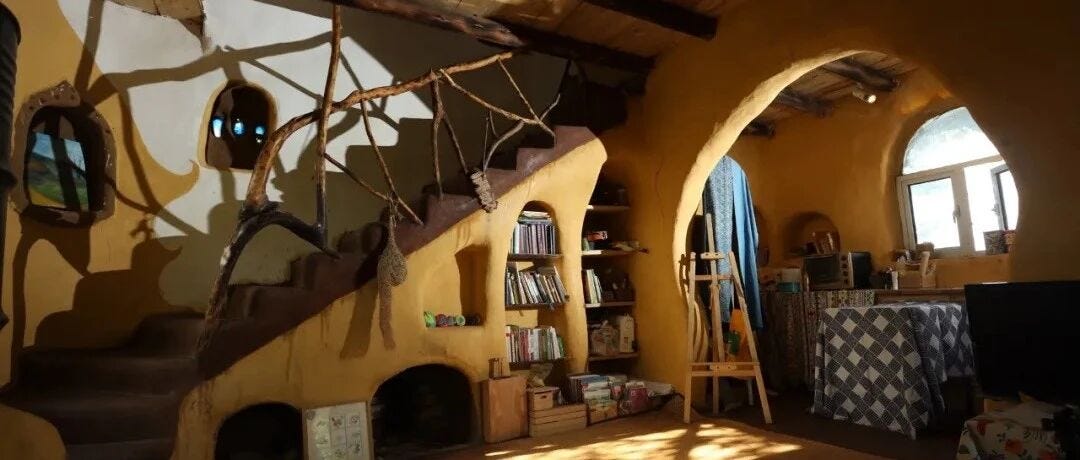
Natural building and cob-earthen architecture
Bamboo and timber structures
Traditional building restoration
Ecological architecture
These approaches carry genuine value — they reconnect architecture with land, climate, and human experience.
But there is a gap. Our imagination for architecture that points toward the future remains far too narrow.
We talk about future farming, future energy, future transportation — yet almost no one asks:
“Why does the house of the future have to look exactly like the house of today?”
03 First Principles: What Does Architecture Actually Need to Do?
Setting aside all style, material, and ideology, let’s ask only: what human needs does a building exist to fulfill?
① Comfortable Temperature
Protection from cold, heat, and humidity.
Is it possible that future building materials might carry inherent “smart thermal regulation”? Could buildings actually breathe?
② Spaces for Life’s Activities
Sleep, food, sanitation, rest — the most primal residential needs.
③ Water, Energy, and Resource Cycles
Future possibilities include:
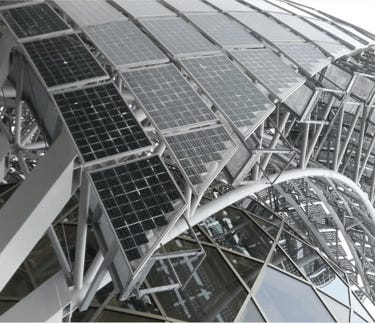
Photovoltaics integrated into the building itself
Rainwater harvesting and recycling
Atmospheric water generation
Thermal cycling
Community microgrids
The building itself becomes a small living ecosystem.
④ Privacy and Security
Visual barriers, acoustic barriers, a sense of boundary.
What we call a “wall” is fundamentally just one technological solution for achieving separation. Concrete is not sacred. Brick is not a cosmic truth.
⑤ Ventilation and Natural Light
Human beings need sunlight, fresh air, and circadian rhythm.
The greatest failure of much modern architecture is that it functions as a container for storing people rather than a space in which life can unfold.
⑥ Higher Needs: Nature and Spirit
Greenery, outdoor activity, emotional calm, bodily awareness.
This is, in fact, a component of human spiritual ecology.
04 So What Might Architecture of Tomorrow Actually Look Like?
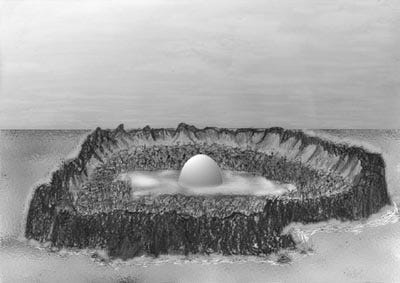
The science-fiction novel Thiaoouba Prophecy describes a type of structure called DOKO:
Egg-shaped form
No doors, no windows
Inhabitants pass directly through the walls
Walls are transparent from inside, opaque from outside
Formed by electromagnetic and force-field structures (not brick or stone)
Rain and wind cannot penetrate
Automatically extracts water from the atmosphere
Interior temperature self-regulates
What we call “solid architecture” today is, at its core, just molecules, atoms, and wave structures. A wall is simply one era’s particular technology for physical separation.
If technology continues to advance, might we one day redefine “architecture” through electromagnetic fields, novel materials, intelligent structures, and programmable matter?
The house of the future may not be something that is “built” — it may be something that is “generated.”
05 But Today, What Matters Most Is Not “Future Architecture” Itself
What truly matters in technology is not dazzle — it is the ability to respond to genuine human needs.
The spirit of the hackathon: technology for its own sake is not the point.
When technology genuinely returns to the context of life and human need — how will it reshape what comes next?
Do we dare reimagine: how should human beings actually live?
06 On Rural Revitalization — I May Hold a Different View
The default narrative of rural revitalization tends to assume:
“The countryside needs to be saved.” → Revitalize villages, solve depopulation, make agriculture smarter.
My different view:
People should be the subject.
The real question is not “how do we make people adapt to the village?” but:
“How do we give more people the conditions to return to land and community life?”
07 The Future of Rural Living Is Not “Going Back to Farm”
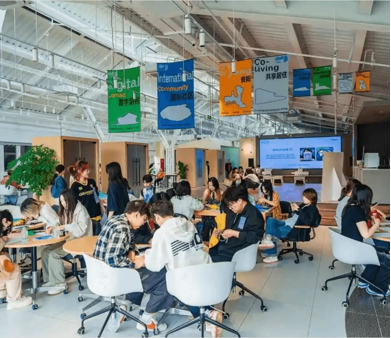
It is: restructuring the relationship between production and life.
Why must people who return to the countryside abandon their existing work? The following professions can all continue from rural settings:
Programmers
AI creators
Musicians
Comic artists and illustrators
E-commerce operators
Remote workers of all kinds
China’s rural infrastructure today is already sufficient to support a wide range of digital work.
Reclaiming Agency: People Shape the Village
Direction What It Looks Like Bring Your Work Back Digital nomads, creators, and remote workers need not “integrate” into traditional agriculture — they bring urban work with them and restructure productive relationships in rural space Low Cost + High Quality Leverage lower living costs and superior natural environments to “stay” — forming stable new communities in the countryside Organic Emergence of Needs As new communities take root, genuine demand for co-working spaces, innovative education, and distributed energy infrastructure will arise organically from below
As more people genuinely make long-term lives in the countryside, the following needs will naturally emerge:
Educational needs
Cultural needs
Community needs
Healthcare needs
Spiritual needs
These emergent new needs — the ones that grow from life actually lived — are where the true opportunity for future rural building lies.
08 The Future Village Should Not Be Merely the City’s Escape Route
The meaning of the future village has perhaps never been “escaping the city.”
Rather, it is:
Practicing, once again, a way of life better suited to long-term human flourishing.
When we finally dare to reimagine how human beings ought to live — could a new future already be beginning to take shape?